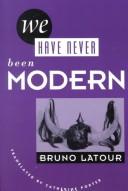
I’ll be honest about something first, I don’t think I got all of this on the first pass, and I’m not sure I got all of it on the second either. Latour’s core claim, that modernity’s whole self image rests on a supposed purification between Nature and Society that never actually happened in practice, that we’ve always been generating hybrids, ozone holes and frozen embryos and the like, that cross the line we insist on drawing, is a genuinely compelling two sentence idea buried under a hundred and fifty pages of dense theoretical throat clearing about premoderns and postmoderns and the Constitution with a capital C. I found myself rereading paragraphs I’d already read.
What kept me going was the specific case studies, not the meta argument about modernity itself. When Latour is actually working through a concrete hybrid, an ozone hole that is simultaneously a chemical fact, a political controversy, and a discourse object, the book snaps into focus and you can feel exactly what he’s building toward. When he zooms back out to talk about premoderns versus moderns versus postmoderns in the abstract, I lost the thread more than once and had to go back a page. I don’t think that’s just me being undertrained in this kind of theory, though I probably am undertrained in it. A few other readers have said basically the same thing, that the idea is simple and the delivery isn’t, and I think that’s a fair complaint even from people who ultimately rate the book highly.
Would I recommend it? Cautiously, and with a warning attached. If you’ve read Latour before, or you came up through science and technology studies, this will probably land the way it’s meant to. If you haven’t, go in knowing you’re going to hit stretches where the prose is working harder to sound rigorous than to actually clarify, and that’s fine, that’s the price of admission here. I still think about the ozone hole example a lot, more than I think about almost anything from a theory book I’ve read in years, which tells you the two sentence version of this argument really did get into my head even where the full version didn’t quite land.