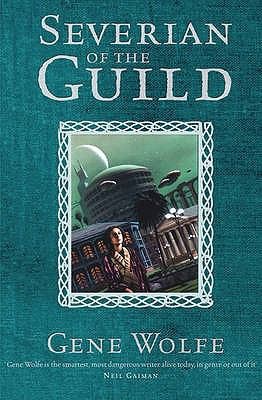
Severian is a torturer, exiled from his guild for the mercy of letting a prisoner die quickly, and that single fact is about the only thing I can tell you confidently about this book, because everything else is filtered through a narrator who admits early on to having a perfect memory and then proceeds to be, by any reasonable measure, completely unreliable anyway. Wolfe isn’t lying to you exactly. He’s just trusting you to notice what Severian himself doesn’t, or won’t, and the tetralogy rewards rereading in a way I’ve genuinely never experienced with another book, scenes that read as simple incident the first time through detonate with retroactive meaning once you know what’s actually happening underneath them.
The prose is doing something unusual too, dense with invented and archaic vocabulary drawn from real, obscure English words rather than made up neologisms, which gives the whole thing a texture unlike anything else I’ve read in the genre, less a fantasy world than a science fiction far future dressed in fantasy’s clothes, Earth so distant from now that the sun itself is dying and technology has cycled back around to looking like magic to the people living in it. I had to slow way down for stretches of this, looking words up, rereading paragraphs once a detail two hundred pages later recontextualized them. That’s not a complaint. It’s the whole design.
I’ve seen the claim that Wolfe is the greatest living writer in English tossed around in reviews of this and I understand the impulse even if I’d hedge it slightly, Shakespeare’s a better pure stylist, Melville did more for the American sentence, but for sheer structural audacity, building a book that only fully exists once you’ve finished it and gone back through with new eyes, I don’t know anyone doing what Wolfe does here. This isn’t a casual recommendation. It asks a lot, and some of what it asks you won’t even realize you’re being asked until the reread. But for a certain kind of reader, the kind who likes puzzles buried in prose rather than laid out on the surface, this is about as rewarding as it gets.